

Powering Excellence Across Global Industries
Simio Process Digital Twins power critical operations across Fortune 500 companies and leading organizations across sectors. Our discrete event simulation based technology delivers measurable results through data-driven decision making and virtual scenario testing.



.webp?width=300&name=Hyundai%20(1).webp)
.webp?width=300&name=Air-Canada%20(1).webp)





























Simio Process Digital Twin: The Foundation of Confident Decision-Making
Every operational decision carries weight—the difference between efficiency and waste, success and setback, confidence and uncertainty. In today’s complex business environment, leaders face an impossible choice: make critical decisions with incomplete information or delay action while opportunities vanish. Simio Process Digital Twins eliminate this dilemma by creating intelligent, evolving virtual replicas of your operations that maintain continuous, bidirectional connections with your physical processes, enabling you to see not just what is happening, but what will happen next.
Unlike traditional simulations that rely on static historical data, Simio’s Process Digital Twins integrate real-time information to create living models that adapt and predict with remarkable accuracy. This dynamic synchronization enables you to test scenarios virtually before implementing them physically, identify bottlenecks before they impact performance, and optimize resource allocation based on current conditions rather than outdated assumptions. The technology bridges the gap between physical constraints and digital possibilities, providing decision-makers with unprecedented visibility into operational dynamics that would otherwise remain invisible.
Organizations implementing Process Digital Twins report not just improved efficiency, but a fundamental shift in their decision-making confidence. When you can predict outcomes, test alternatives, and understand the ripple effects of every choice, uncertainty transforms into strategic advantage. Your operations become not just more efficient, but more intelligent, adaptive, and resilient in an increasingly complex world. This isn’t simply about optimizing what exists today—it’s about confidently shaping what’s possible tomorrow.
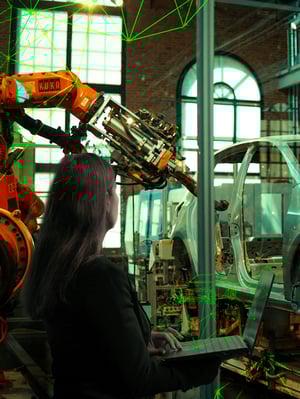
The Simio Solution: Simulate What-If Scenarios with Confidence
Simio’s digital twin simulation helps you model, analyze, and optimize complex systems with ease. Our solution is built on four foundational pillars that work together to deliver exceptional value.
An inexpensive, quick and easy way to build beautiful responsive website pages without coding knowledge
- Advanced Analytics: Identify patterns and optimization opportunities automatically
- Predictive Capabilities: Forecast potential issues before they impact operations
- Rapid Scenario Comparison: Efficiently analyze multiple operational scenarios side-by-side to identify the optimal approach based on your specific business objectives

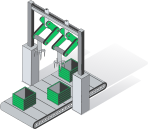
Our solution can model a variety of business processes across all operational contexts. The process digital twin approach transforms how organizations manage complex operations:
- End-to-End Visibility: Model complete processes from inputs to outputs
- Cross-Functional Integration: Connect interdependent processes for holistic optimization
- Process Improvement: Identify and eliminate bottlenecks and inefficiencies
Our solution can model a variety of business processes across all operational contexts. The process digital twin approach transforms how organizations manage complex operations:
- End-to-End Visibility: Model complete processes from inputs to outputs
- Cross-Functional Integration: Connect interdependent processes for holistic optimization
- Process Improvement: Identify and eliminate bottlenecks and inefficiencies
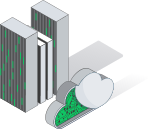
Simio creates object-oriented, data-generated, and data-driven simulation models that accurately replicate real-world processes. This digital twin technology enables:
- Virtual Experimentation: Test changes safely before physical implementation
- Real-Time Planning: Adjust plans and schedules based on changing conditions or unexpected events
- Continuous Improvement: Refine processes based on ongoing analysis
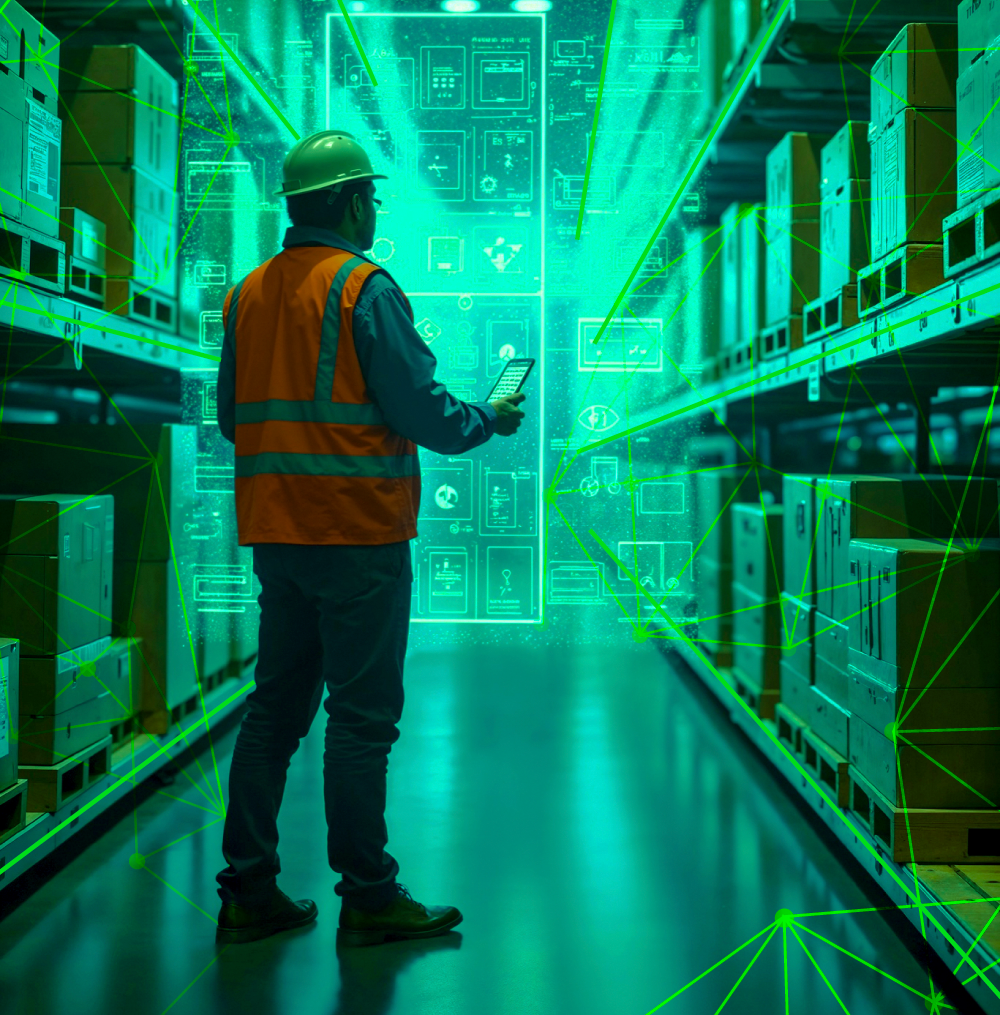
The Value of Process Digital Twins: Measurable Results
Digital twin benefits extend far beyond operational improvements to deliver strategic advantages and measurable returns on investment. Organizations implementing Simio’s digital twin technology typically experience significant improvements across key performance indicators.
 Simulate & Optimize
A Process Digital Twin offers a low-risk method to simulate, analyze, and optimize business transformation and process improvement proposals, such as CapEx initiatives, process changes (e.g., automation, layout adjustments, labor schedules), all aimed at enhancing efficiency and achieving the expected ROI.
20%
IMPROVEMENT IN RESOURCE EFFICIENCY
15%
REDUCTION IN WORK IN PROGRESS (WIP)
 Test Before Investing
Process Digital Twins enable organizations to virtually test capital expenditures and process changes before physical implementation, eliminating the risk of costly mistakes while providing data-driven validation of expected returns.
40%
REDUCTION IN IMPLEMENTATION RISK
25%
DECREASE IN PROJECT TIMELINE
 Visualize & Validate
Digital Twin technology creates a virtual replica of your operations where you can test process changes, equipment configurations, and staffing models in a risk-free environment before committing resources to physical implementation.
30%
REDUCTION IN OPERATIONAL COSTS
50%
FASTER TIME-TO-MARKET
 Predict & Prescribe
Process Digital Twins leverage real-time data to predict operational outcomes and prescribe optimal execution schedules, enabling organizations to make confident decisions based on accurate simulations rather than assumptions or guesswork based on siloed information.
35%
IMPROVEMENT IN DECISION CONFIDENCE
40%
MORE ACCURATE PLANNING
 Optimize Resource Allocation
Digital Twin simulation allows organizations to determine the ideal distribution of people, equipment, and materials across operations, identifying the optimal configuration to maximize productivity while minimizing costs.
20%
INCREASE IN THROUGHPUT CAPACITY
15%
IMPROVEMENT IN RESOURCE UTILIZATION
 Accelerate Innovation
Process Digital Twins provide a safe environment to test new ideas and process innovations without disrupting current operations, allowing organizations to validate concepts virtually before physical implementation.
50%
FASTER IMPLEMENTATION OF PROCESS CHANGES
40%
REDUCTION IN INNOVATION COSTS
 Enhance Decision Support
Digital Twin technology transforms decision-making by providing data-driven insights based on accurate simulations of multiple scenarios, enabling leaders to compare alternatives and select the optimal approach with confidence.
35%
REDUCTION IN DECISION-MAKING TIME
25%
IMPROVEMENT IN OUTCOME PREDICTABILITY
 Mitigate Operational Risk
Process Digital Twins enable organizations to identify potential disruptions and develop effective contingency plans before problems occur, significantly reducing operational risk and enhancing business continuity.
25%
REDUCTION IN UNPLANNED DOWNTIME
30%
DECREASE IN OPERATIONAL DISRUPTIONS
Real-World Success: What Our Customers Say
Organizations across industries are achieving transformative results with Simio’s digital twin platform. Hear directly from the professionals who use our technology to solve complex operational challenges and deliver measurable business impact.

“Our customers want both choice and speed. By understanding where our customers’ expectations are going, and by leveraging rapid modeling with Simio, we are prepared to tackle this challenge.”
“The Simio Digital Twin is now used 24/7 to generate plans that are accessible to all. These plans are used in daily management meetings to establish the strategy. The Simio Digital Twin model has now been run over 65,000 times to generate plans. It is equivalent to running the model every hour for over 7 years.”
“Frankly, I’ve been stunned that every time we came up with a new question or level of complexity that we needed to account for in the simulation, the Simio software answered the bell and responded to our needs.”
“Across our sites we have multiple Simio users of varying skill level, and we have been able to successfully hand-off models to local teams with guided instructions for how to make conceptual level model changes through data-driven inputs. We view Simio’s data-driven and data-generated model configuration as a key enabler for Digital Twin development.”
“We find that the use of objects to quickly build a working model of a plant layout very appropriate. Moreover, the possibility to add additional logic in the case of movement and synchronization of different lines through a set of instructions is easy to implement and expanded our capability to solve more complex problems.”
“Simio cannot be replaced or trumped for the power and ability that you gain by using it. The information gleaned from a model like this is truly unmatched. Simio is an incredibly powerful tool that helps make Penske better every day.”
“By using the forward-looking benefits that Simio simulation-based performance analytics offer, we saved tens of millions of dollars in unnecessary investments in building expansion projects.”
“We modeled the prototype assembly process in Simio and adjusted resources to reduce the lead times from 3 weeks to less than 1 week.”
“Across all [production] lines and all tested schedules, we were able to demonstrate an 8% throughput lift. This lift was achieved using a black box optimizer developed by McKinsey and a Simio Digital Twin model.”
“I like how fast Simio is when I run experiments because it uses all the [processing] cores on my computer. ‘Boom’ and it is done!”
“The ability to test the planned facilities under various conditions enabled us to understand the different tradeoffs and deliver designs well suited to our customers’ needs, which can be expanded as traffic increases.”
“The model proved to be very adherent to the real dynamics of the operations of CTC’s cane sugar internal movement in the plant. It also allows you to view points of queuing and resources with high and low occupancy.”
“We have built dozens of scalable Digital Twins for our clients with 99% prediction accuracy by leveraging commercial solutions such as Simio as well as building custom solutions in Python.”
Digital Twin Technology: Key Simio Platform Features
Simio’s digital twin platform combines powerful simulation capabilities with intuitive design to enable effective what-if scenario testing. Our technology delivers exceptional value through a comprehensive feature set that adapts to your unique operational challenges.

Simio Process Digital Twins can be used for both greenfield and brownfield applications, to design new or improve existing operational processes.
- Multi-Scale Modeling: Simulate everything from a single critical process to complex networks spanning multiple facilities
- Time-Flexible Analysis: Analyze current operations or predict future scenarios to support both tactical and strategic decision-making

Simio provides a traditional point-and-click user interface alongside an intuitive data-generated, data-driven approach for developing and executing Process Digital Twin models.
- Accelerated Development: Create complex models faster using data-driven approaches that automatically generate model components
- Enterprise Scalability: Easily scale models to new sites and multi-facility applications through data-driven model generation

Build comprehensive Process Digital Twin models using intelligent out-of-the-box object libraries, and easily expand these libraries through subclassing.
- Intelligent Object Architecture: Create sophisticated models using pre-built intelligent objects with extensible behaviors and customizable properties
- Hierarchical Reuse: Use any Simio model as an object within another model, enabling modular design and efficient model development

Simio provides a library of application-specific templates containing predefined objects, process logic, and data schemas to jump-start Process Digital Twin model development.
- Rapid Deployment: Begin modeling complex processes immediately with industry-specific templates and pre-built components
- Customizable Frameworks: Adapt any template to your specific requirements while maintaining the underlying structure and best practices
Simio supports training, testing, and embedding Deep Neural Network agents into Process Digital Twin models, along with bidirectional interaction with Machine Learning algorithms.
- Neural Network Integration: Embed trained Deep Neural Networks directly into models to enhance decision-making capabilities
- ONNX Model Support: Import and utilize Machine Learning regression models in the ONNX format for advanced predictive capabilities
Simio offers a range of deployment options, including cloud-based solutions, to broaden the reach and utility of Process Digital Twins for stakeholders across the enterprise.
- Enterprise Accessibility: Provide model access to stakeholders throughout your organization with flexible deployment options
- Multi-Purpose Applications: Support diverse use cases from simulation and planning to scheduling and shop floor orchestration

Simio’s architecture is built on an extensive integration framework that includes bidirectional database connectors and support for multiple data formats and programming languages.
- Comprehensive Data Connectivity: Connect directly to databases, Excel, CSV files, and IoT devices for seamless data exchange
- Programming Language Support: Extend functionality through C#, Python, and SQL integrations to meet specialized requirements

Simio Process Digital Twin models are true digital twins in both operational accuracy and visual detail, with powerful visualization capabilities.
- Immersive Visual Representation: Experience models in 3D, GIS, and VR for intuitive understanding of complex operations
- Multi-Format Reporting: Analyze results through data reports, Gantt charts, and interactive dashboards for comprehensive performance insights
Solutions & Technology Portfolio
Simio delivers a comprehensive suite of technologies and solutions that enable organizations to transform operations through digital twin simulation. Our platform combines powerful capabilities that work together to help you simulate what-if scenarios with confidence.
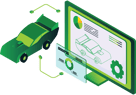
At the core of Simio’s platform is our powerful discrete event simulation engine, which models systems as sequences of events occurring at specific points in time.
- Advanced Event Processing: Model complex interactions between entities with sophisticated event handling capabilities
- Stochastic Modeling: Incorporate controlled randomness to reflect real-world variability and uncertainty in your models
This technology serves as the foundation for our digital twin capabilities, allowing you to create virtual replicas of your operations for testing and optimization without risk to your actual systems.
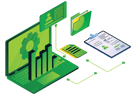
Transform production operations with Simio’s APS solution that optimizes resource allocation while respecting complex business rules and constraints.
- Constraint-Based Scheduling: Generate optimal schedules that balance competing priorities and constraints
- Real-Time Rescheduling: Quickly adapt to disruptions with automated schedule adjustments and optimization
Our APS solution has helped manufacturers reduce lead times by 10% while improving on-time delivery performance by up to 80%, delivering measurable results through intelligent resource allocation and constraint-based scheduling.

Implement Demand Driven Material Requirements Planning with Simio’s specialized digital twin solution that aligns inventory with actual demand signals.
- Dynamic Buffer Management: Optimize inventory positions with adaptive buffer calculations that respond to changing conditions
- Flow-Based Planning: Position inventory strategically based on actual demand patterns rather than forecasts
Organizations implementing our DDMRP solution typically experience inventory reductions of 15-30% while improving service levels by 5-50%, creating more responsive and efficient supply chains.

Extend your simulation capabilities with seamless Python integration that enables custom algorithm development and advanced analytics.
- Custom Algorithm Development: Create specialized algorithms tailored to your unique processes
- External Library Access: Leverage the vast ecosystem of Python libraries and tools within your simulation models
Python integration allows your team to solve complex challenges by combining Simio’s simulation expertise with the flexibility and analytical power of Python programming.
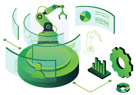
Experience immersive visualization and collaboration capabilities through our user extension with NVIDIA Omniverse technology.
- Photorealistic Visualization: Create lifelike representations of your operations for intuitive understanding
- Real-Time Collaboration: Enable multiple team members to work simultaneously on complex models
This partnership transforms how you visualize and interact with your digital twins, delivering enhanced stakeholder communication and deeper operational insights.
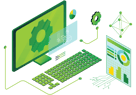
Simio’s academic program provides students and educators with access to our powerful digital twin simulation platform to develop the next generation of simulation experts.
- Free Academic Licenses: Full-featured software for teaching and research applications
- Comprehensive Curriculum: Ready-to-use teaching resources and annual student competitions
By partnering with educational institutions worldwide, we’re helping to prepare future professionals while advancing simulation science through innovative research and applications.
Pioneering Simulation Excellence Since the 1970’s
The development team behind Simio introduced their first commercially available Discrete Event Simulation product over 50 years ago. For five decades, this team has remained at the forefront of innovation, continuously advancing the science and art of Discrete Event Simulation.
In 2009, Simio released a comprehensive, agile simulation platform that represents an evolutionary fourth-generation design — built from the ground up to be fully object-oriented, data-generated, data-driven, and highly adaptive — critical innovations for overcoming hurdles that hampered previous generations.
Fast-forward to today, the Simio development team continues to build on this original architecture, advancing Simio’s capabilities. Time-tested and proven, the Simio Discrete Event Simulation Platform is fast, scalable, adaptive, and adept at fully utilizing enterprise data while seamlessly integrating with operational environments.
Simio is taught in hundreds of universities, trusted by thousands of users, and deployed across a broad range of industries worldwide, including manufacturing, warehousing, logistics, supply chain, healthcare, mining, energy, transportation, foodservice, and consumer services.