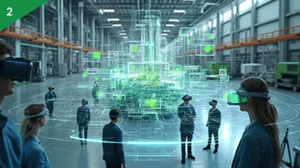
Simio Process Digital Twin: Simulate What-If with an Intelligent Digital Twin
Create accurate digital replicas that simulate, predict, and optimize your operations in real-time—transforming data into actionable intelligence for superior decision-making
What is a Digital Twin?
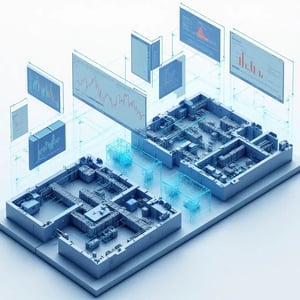
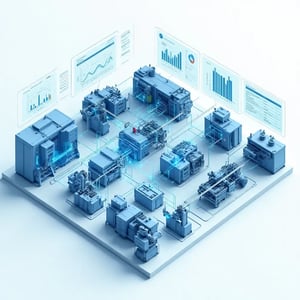
While many solutions use the term “Digital Twin,” true digital twins transcend static models—they are dynamic, data-driven replicas that mirror real-world operations and enable powerful what-if simulations. Most platforms struggle with real-time adaptation, but Simio’s Intelligent Adaptive Process Digital Twins address this challenge by simulating multiple realistic scenarios without disrupting actual operations.
Simio’s agile platform seamlessly integrates with enterprise data systems, processing diverse data streams from sensors, IoT devices, and business systems to create continuously updated “digital shadows.” This real-time event-driven synchronization enables proactive decision-making through a live feedback loop between physical and digital environments.
Built on industry-leading Discrete Event Simulation, our digital twin technology supports comprehensive Industry 4.0 transformation by allowing organizations to design, experiment with, and optimize operational models. The true value lies in risk-free testing and analysis of process changes, equipment modifications, and staffing adjustments before implementation—minimizing costs, reducing risks, and accelerating resolution of operational challenges and process inefficiencies.

Why develop a Simio Process Digital Twin?
Digital twin technology plays a critical role in optimizing system performance and facilitating proactive asset management throughout its lifecycle. The ability to simulate what-if scenarios provides unprecedented insight into complex operational systems. Simio’s process digital twin solution delivers powerful capabilities that transform how organizations understand, optimize, and predict operational performance.
Simio’s agile platform for developing Intelligent Adaptive Process Digital Twins supports a wide range of workstreams within a digital transformation process. Independent of the workstream selected, successful Process Digital Twin development — whether modeling current or future operational processes — requires the detail knowledge including the business rules and decision logic as well as all the physical constraints, required for the execution of operations. This knowledge together with the relevant data enable organizations to create digital replicas that accurately simulate operational behavior (current or future) under various conditions.
Organizations implementing Simio Process Digital Twins gain three distinct competitive advantages through powerful what-if simulation capabilities. These transformative benefits address critical operational challenges while creating sustainable business value across all levels of the enterprise:
Achieve Unparalleled Operational Insight
Optimize Through Advanced Simulation
Accelerate Decision-Making Processes
The Four Dimensions of Simio’s Digital Twin Technology
To deliver comprehensive operational intelligence, Simio’s Process Digital Twin technology is built upon four foundational dimensions that work together as an integrated system. Each dimension enhances the ability to simulate what-if scenarios with increasing intelligence and accuracy, creating a digital twin that evolves alongside your operations.
Intelligent
- AI-Powered Simulation: Combining Discrete Event Simulation with AI creates digital twins capable of generating optimized solutions to complex problems with exceptional efficiency. These intelligent models can make optimized decisions, and deliver predictive insights that transform operational decision-making.
- Automated Decision Guidance: Move beyond monitoring to active decision support with AI-driven performance recommendations that highlight optimization opportunities before issues arise. This capability evaluates alternatives and suggests optimal approaches based detail what-if analysis.
- Risk Assessment: Intelligent digital twins evaluate potential risks across multiple scenarios, providing analysis that would be impossible through manual methods. This capability helps organizations develop mitigation strategies before problems emerge.
Adaptive
- Self-Calibrating Models: Simio’s technology continuously updates the digital twin based on the current enterprise and execution system’s data, maintaining model accuracy as physical systems change. This eliminates model drift and ensures reliable what-if simulations.
- Enterprise Data Responsiveness: Process Digital Twins automatically adapt to changes in resources, materials, routings, network changes, bill of materials, labor requirements, maintenance schedules, and product mix. This ensures the model remains accurate without extensive reconfiguration.
- Evolutionary Learning: The digital twin evolves with your operation, incorporating new data patterns and constraints to maintain relevance throughout your systems’ lifecycle. This adaptive approach ensures increasing value as your business grows and changes.
Process
- Versatile Process Modeling: Model diverse business processes including manufacturing operations within single or multiple facilities, warehouse operations, and complex end-to-end supply chains. This versatility makes Simio applicable to virtually any operational environment.
- End-to-End Visibility: Gain comprehensive visualization of entire operational workflows, revealing complex interdependencies and enabling holistic optimization. This visibility transforms how teams understand and manage complex systems.
- Cross-Functional Integration: Unify diverse processes into a coherent model that reflects real-world interactions between departments, systems, and resources. This integration breaks down silos and enables coordinated improvement initiatives.
Digital Twin
The Building Blocks of a Simio Process Digital Twin
Simio’s Process Digital Twin combines four interconnected building blocks that form a comprehensive decision support system. Rather than operating independently, these elements work together in a continuous cycle of improvement, each enhancing the capabilities of the others.
Knowledge Base
- Centralized System Repository: Develop a single-point-of-reference knowledge base that captures all system constraints, business rules, and detailed logic in a comprehensive simulation model. This centralized approach ensures accurate replication of complex, mission-critical operations across single sites or large multi-site systems.
- Intelligent Data Integration: Automatically collect, validate, and standardize data from sensors, enterprise systems, and manual inputs. This integration simplifies implementation and maintenance while ensuring your digital twin operates with complete, accurate information.
- Protect Against Knowledge Drain: Roughly 25% of manufacturing employees are 55 and over and retiring at a rate of 10,000 per day – manufacturers are struggling with knowledge drain. Digital Twins allow organizations to capture that knowledge to maintain consistent performance and train new employees.
Performance Benchmarking
- Dynamic Performance Assessment: Establish process performance benchmarks to evaluate current operations and accurately predict future performance for factories and supply chains. This enables validation of changes such as automation implementations, new equipment additions, and replenishment policies like DDMRP.
- KPI Baseline: Track key performance indicators against the established benchmarks to instantly identify deviations and evaluate improvement opportunities. This dynamic benchmarking provides continuous visibility into operational performance across all systems as process and market changes occur.
- Customizable Metrics Framework: Define and monitor the specific performance metrics that matter most to your operation and business objectives. This customization ensures your digital twin delivers relevant insights across all organizational levels.
Plan & Schedule
- Feasibility-Driven Planning: Create executable plans and schedules for shop floor, warehouse, factory, and supply chain operations that respect all resource capacity, material, and timeline constraints. This comprehensive approach enables fully autonomous execution across all relevant time ranges.
- Scenario-Based Optimization: Develop and compare multiple operational scenarios to identify optimal approaches for meeting changing demands and constraints. This capability transforms strategic and tactical decision-making through powerful what-if simulations.
- Adaptive Scheduling: Generate and continuously refine schedules that automatically adjust to changing conditions while balancing competing priorities. This dynamic approach ensures plans remain viable even as operational conditions evolve.
Reference Model
- Adaptive Digital Reference: Maintain a data-generated, data-driven Intelligent Adaptive Process Digital Twin that serves as a “current status” reference model of your process. This living model enables accurate determination of future factory and supply chain performance for ongoing and new transformation projects.
- Variance Analysis: Automatically identify and quantify deviations between actual or planned future performance and reference model expectations to pinpoint improvement opportunities. This analytical capability highlights areas requiring attention before they impact overall performance.
- Continuous Evolution: Systematically update the reference model based on new insights, changing requirements, and proven improvements. This ongoing refinement supports investment decisions and ensures your digital twin evolves alongside your operation.
Operational Value of a Simio Process Digital Twin: Real-World Impact
Implementing a Simio Process Digital Twin delivers measurable value across multiple dimensions of your operation. Organizations leveraging this technology experience significant improvements in efficiency, agility, and decision quality through powerful what-if simulation capabilities.
Evaluate Alternatives & Analyze the Impact of Ongoing Changes
- Comprehensive What-If Analysis: Create and evaluate unlimited scenarios to test operational policies, process changes, and new product introductions before implementation. This risk-free experimentation enables data-driven decisions for both strategic initiatives and day-to-day operational adjustments.
- Production Capacity Optimization: Simulate the impact of adding new equipment, tooling, robotics, and autonomous mobile robots (AMRs) to production environments. This capability allows organizations to validate automation investments and capacity expansions while identifying optimal implementation approaches.
- Workforce and Layout Planning: Test adjustments to worker skill requirements, shift patterns, staffing levels, plant layouts, and operation sequences. These simulations reveal how physical and human resource changes affect overall system performance, identifying the most effective configurations.
- Inventory Strategy Evaluation: Model different material availability scenarios and inventory policies, including Just-in-Time (JIT), Kanban, and Demand-Driven Material Requirements Planning (DDMRP). This analysis optimizes inventory levels while maintaining production requirements and service levels.
- Cascading Impact Assessment: Predict how proposed changes affect the entire operational system, identifying both direct impacts and cascading effects across interconnected processes. This holistic view prevents unintended consequences and ensures changes deliver their intended benefits across the organization.
Create Actionable and Feasible Plans and Schedules
- Synchronized Production Orchestration: Generate plans that synchronize production across entire processes to increase throughput and on-time delivery performance. This comprehensive scheduling approach ensures all operational elements work in harmony to achieve maximum efficiency.
- Cost Reduction Analysis: Identify opportunities to reduce production costs, including material, labor, penalties, energy, and work-in-progress expenses. These insights help organizations achieve significant savings while maintaining or improving output quality and volume.
- Performance Enhancement: Improve production schedule adherence, order fulfillment rates, and customer service levels through constraint-aware planning. This capability ensures plans respect all resource, material, and timeline constraints for truly feasible execution.
- Autonomous Operations Support: Enable streamlined, efficient operations through near real-time scheduling and orchestration that adapts to changing conditions. This autonomous capability maintains optimal performance even as priorities shift and disruptions occur.
- AI-Optimized Planning: Achieve superior results by training, testing, and deploying artificial intelligence within your planning and scheduling processes. This advanced capability continuously improves plan quality through machine learning and adaptive algorithms.
Integrated Data and Workflow Management Features
- Enterprise-Wide Accessibility: Provide multi-user browser-based access with customizable permissions, roles, traits, and location settings. This capability ensures the right stakeholders have appropriate access to digital twin insights while maintaining system security.
- Seamless System Integration: Connect your digital twin with enterprise systems through dynamic data connectors including Web APIs and cloud-based data pipelines. This integration maintains data currency and ensures all simulations reflect actual operational conditions.
- Advanced Application Interface: Interface seamlessly with supporting applications such as Manufacturing Execution Systems (MES), machine learning platforms, and business intelligence tools like Tableau and Power BI. This connectivity creates a comprehensive digital ecosystem for operational excellence.
- Structured Result Distribution: Control and distribute model results across teams in a structured, actionable format. This organized approach ensures insights reach the right decision-makers at the right time with appropriate context for implementation.
- Collaborative Decision Environment: Enable cross-functional teams to access shared operational information and work together on complex decisions. This collaborative framework accelerates problem-solving and ensures alignment across all organizational functions.
Key Components of a Simio Process Digital Twin
Simio’s Process Digital Twin solution combines powerful technologies to create a comprehensive operational intelligence platform. Each component plays a vital role in delivering actionable insights and enabling intelligent what-if simulations for superior decision-making.
Data-Generated & Driven
- Enterprise Data Foundation: Models utilize comprehensive enterprise data (resources, material master, BOMs, routings, status) and help to test and validate key aspects like granularity, quality, correlation, speed, and availability.
- Real-Time Synchronization: Connect to diverse data sources including sensors, IoT devices, and manual inputs to maintain an accurate digital representation reflecting real-world conditions.
- Intelligent Processing: Automatically validate, transform, and structure incoming data for immediate use in simulation models, eliminating manual preparation while ensuring quality.
- Adaptive Utilization: Incorporate current operational data to reflect changing conditions as well as planned changes in real-time, keeping simulations accurate as operations evolve.
- Data Quality Assessment: Identify data gaps and inconsistencies that affect operational performance, helping organizations enhance data management while improving simulation accuracy.
Intelligent Objects
- Smart Component Modeling: Represent system elements (machines, transporters, robots, workers) as intelligent objects that interact and incorporate AI/ML to optimize processes.
- Behavior-Rich Design: Create objects with realistic behaviors, decision logic, and physical characteristics that dynamically respond to changing system conditions.
- Object-Oriented Structure: Develop models using an hierarchical object-oriented approach that simplifies development while maintaining accuracy and flexibility for future enhancements.
- Reusable Libraries: Access pre-built objects encapsulating industry-specific behaviors, significantly reducing development time while ensuring model consistency.
- AI Enhancement: Augment objects with artificial intelligence capabilities that adapt behavior based on learning or re-training as a result of real-time or changing conditions.
Constraint Models
- Comprehensive Modeling: Include all physical constraints, business rules, and decision logic to accurately replicate actual operational behavior and limitations.
- Tribal Knowledge Capture: Formalize shop floor expertise within constraint models, ensuring the digital twin reflects practical realities beyond documented procedures.
- Dynamic Handling: Automatically adjust operations as constraints change during simulation, reflecting how different limitations will impact real-world systems over time.
- Impact Analysis: Identify how specific constraints affect performance and explore the benefits of constraint adjustments, guiding strategic improvement decisions.
- Multi-Level Definition: Model constraints across multiple levels—from individual machines to enterprise-wide rules—creating a framework that reflects actual operational environments.
Event-Driven
- Discrete Event Core: Simulate forward in time using an event calendar to synchronize tasks and material decisions, ensuring shop floor feasibility in both manual and automated environments.
- Event-Based Logic: Model systems using an architecture that accurately represents how integrated operations respond to various types of triggers and state changes as they occur.
- Sequential Modeling: Precisely represent time-based processes, resource interactions, and state transitions for high-fidelity simulation of complex operational sequences.
- Chain Analysis: Track event sequences to identify causal relationships and dependencies, revealing patterns and improvement opportunities hidden in complex processes.
- Timeline Synchronization: Align simulated events with actual operational timelines to generate feasible schedules that can be executed directly in real-world operations.
Stochastic
- Variability Modeling: Incorporate randomness and process variation to accurately reflect real-world unpredictability like machine breakdowns, quality issues, and material delays.
- Risk Assessment: Enable probabilistic analysis of operational scenarios to support proactive actions and increase the likelihood of achieving performance targets.
- Human Performance: Account for variations in human performance, skill levels, and availability that significantly impact operational outcomes.
- Environmental Factors: Integrate external fluctuations and factors affecting operational performance for comprehensive simulation of actual conditions.
- Probability-Based Decisions: Generate statistical distributions rather than single-point predictions to provide complete information for decision-making under uncertainty.
Templates
- Application Libraries: Access templates with predefined objects, process logic, and data schemas to jump-start digital twin development for complex operational processes.
- Rapid Implementation: Accelerate development using templates incorporating industry best practices, reducing implementation time while ensuring model quality.
- Standardized Architecture: Maintain consistency through standardized components for common operational elements, simplifying maintenance and ensuring reliable analysis.
- Customizable Objects: Adapt templates to specific requirements while preserving core functionality, balancing standardization with operation-specific customization.
- Industry Solutions: Leverage templates designed for your sector with specialized logic, constraints, and metrics addressing unique industry challenges.
Digital Twin Implementation Journey: From Concept to Operational Excellence
Developing an effective process digital twin involves five systematic stages that ensure successful implementation. This structured approach enables organizations to create digital twins that deliver powerful what-if simulation capabilities with maximum value.
Requirements Specifications
Document all process steps, user requirements, physical constraints, business rules, and detailed decision logic for your digital twin implementation. Create a comprehensive Functional Requirement Specification that effectively scopes the project and identifies key stakeholders, critical processes, and success metrics. This foundational stage establishes what your digital twin needs to accomplish and sets clear parameters for development.
Data Review
Assess all relevant enterprise data sources, including manually maintained Excel and CSV files, needed to generate and drive your Process Digital Twin. Evaluate data quality, accessibility, and completeness while identifying gaps that could affect simulation accuracy. This comprehensive review ensures your digital twin will have the necessary information to produce reliable what-if simulations from implementation day one.
Data Pipeline Development
Develop automated data flows that connect your digital twin with enterprise systems through direct integration or cloud-based data infrastructure. Implement validation, transformation, and governance processes to maintain information quality and consistency. This pipeline creates the critical connection between your physical operations and their digital representation, ensuring continuous data currency.
Model Development
Build your data-driven, object-oriented simulation model using Simio’s powerful modeling capabilities. Incorporate operational logic, constraints, and decision rules while validating against historical data to ensure accuracy. This development stage transforms operational knowledge into a dynamic digital representation supporting both offline and online use cases as specified in your requirements.
Data Integration
Connect your validated model with live enterprise data feeds (ERP, MES, PM, IoT) to create a continuously updating digital twin. Establish monitoring processes for data quality and model accuracy to enable near real-time decision support for both predictive and prescriptive applications. This integration activates your digital twin, delivering actionable insights and what-if simulation capabilities for operational excellence.
Next-Generation Features in Simio’s Digital Twin Platform
Simio continues to enhance its digital twin platform with cutting-edge capabilities that extend functionality and deliver greater value. These innovations further strengthen the ability to simulate what-if scenarios with unprecedented fidelity and intelligence.