

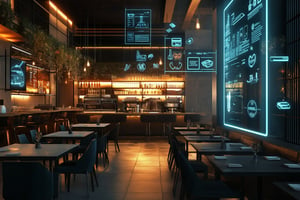
The term “digital twin” has become ubiquitous in industrial circles - but what does it actually mean when simulation technology moves from the engineering office to the operations floor? At Simio Sync 2026, we saw compelling evidence that digital twins have evolved from conceptual frameworks into practical operational tools that guide daily decision-making across multiple industries.
From Static Models to Live Operational Systems
The transformation isn’t about building better models - it’s about fundamentally changing how models function within an organization. Traditional simulation created point-in-time snapshots: an engineer would build a model, load historical data, run scenarios, and generate reports. The model existed in isolation, separate from the actual operation it represented.
Digital twins operate differently. They maintain continuous connections to real-world systems through bidirectional data flows, responding to operational changes and influencing operational decisions in real-time. This architectural shift appears across aerospace manufacturing, food service operations, and consumer goods production - each demonstrating different facets of what becomes possible when simulation meets operations.
The Operational Integration Pattern
Three distinct implementations from Simio Sync 2026 reveal the practical mechanics of this integration:
Boeing’s paint facility planning demonstrates simulation as a dynamic capacity planning tool. Rather than sizing facilities based on static forecasts, their models continuously evaluate batching strategies and equipment requirements against shifting production demands. The simulation doesn’t just predict future capacity needs - it actively informs current decisions about resource allocation and scheduling strategies as actual demand patterns emerge.
McDonald’s McTabs solution showcases simulation as a testing infrastructure replacement. When a virtual customer places an order in their simulator, it triggers actual timestamps in the restaurant’s point-of-sale database, prompting real crew members to execute specific actions. The virtual customer doesn’t just model customer behavior - it becomes an operational testing entity that generates real performance data without requiring physical space or manual data capture. The simulator participates in operations rather than merely analyzing them.
Accenture’s automated scheduling pipeline illustrates simulation as a continuous decision engine for a global consumer goods manufacturer. Their cloud-based system reads production data from blob storage, transforms it, runs simulations, and exports optimized schedules - completing the entire cycle in under one minute. This enables same-day scheduling adjustments that respond to actual conditions rather than week-old forecasts, with the simulation running continuously as part of the operational data pipeline.
What Makes a Digital Twin “Operational”
The pattern across these implementations reveals three defining characteristics that separate operational digital twins from traditional simulation models:
1. Bidirectional Data Flow
Operational digital twins don’t just consume data - they influence the systems they model. McDonald’s virtual customers trigger real database events. Boeing’s models inform immediate batching decisions. Accenture’s simulations generate schedules that directly control production sequences. The information flows both ways: reality informs the model, and the model guides reality.
2. Real-Time Processing
The value of operational digital twins comes from their responsiveness. When Accenture’s system completes its entire pipeline in under a minute, it crosses a threshold: simulation results become available fast enough to influence the decisions they’re meant to inform. Traditional simulation might take days or weeks to generate insights - by which time the operational context has already shifted.
3. Continuous Operation
These aren’t occasional analysis tools pulled out for major projects. Boeing’s paint facility models run continuously as production mix changes. McDonald’s virtual testing operates throughout restaurant shifts. Accenture’s pipeline executes automatically whenever new data arrives. The digital twin becomes operational infrastructure rather than an engineering project.
Solving Problems Spreadsheets Cannot Touch
The shift to operational digital twins addresses a specific class of business problems that resist traditional analysis tools. Consider McDonald’s challenge: physical testing consumes valuable restaurant space, requires manual data capture (introducing errors), and can only evaluate scenarios that physically fit in the test environment. Their digital twin doesn’t just make testing more efficient - it makes previously impossible tests possible.
Boeing faces similar constraints with Excel-based capacity planning. Duration variability, buffer optimization, complex routing logic, and space utilization interact in ways that spreadsheet formulas cannot adequately model. The simulation doesn’t just automate the calculation - it enables consideration of variables that spreadsheets must exclude.
This explains why the shift is fundamental rather than incremental. We’re not making existing processes faster; we’re enabling processes that previously couldn’t exist. Virtual customers that trigger real operations. Sub-minute scheduling cycles. Continuous capacity optimization. These capabilities emerge specifically because the digital twin operates as part of the system rather than as an external observer.
The Democratization Effect
Perhaps the most significant operational impact appears in who can leverage these capabilities. Traditional simulation required specialized expertise: building models, defining logic, interpreting results. The operational digital twin paradigm changes this equation.
When McDonald’s virtual customers execute automatically, frontline crew members interact with the system through familiar restaurant interfaces - not simulation software. When Accenture’s pipeline runs automatically in the cloud, production planners receive optimized schedules without touching simulation parameters. The complexity moves into the background infrastructure; the value moves to the operational foreground.
This democratization extends simulation’s impact from occasional strategic decisions to daily tactical execution. The tool that once served engineering departments now serves operations managers, shift supervisors, and frontline workers - each accessing simulation-powered insights through operational systems they already use.
From Theory to Practice
The theoretical promise of digital twins - virtual representations that mirror and enhance physical operations - has existed for years. What Simio Sync 2026 demonstrated is the practical reality: organizations across aerospace, food service, and manufacturing have moved beyond pilot projects to production-scale implementations.
McDonald’s isn’t experimenting with virtual testing; they’re replacing physical testers. Boeing isn’t validating simulation concepts; they’re sizing actual paint facilities. Accenture’s client isn’t exploring automation possibilities; they’re scheduling production with sub-minute simulation cycles.
The digital twin has arrived on the operations floor. Not as a futuristic concept, but as practical infrastructure that solves immediate problems spreadsheets cannot touch, enables decisions that manual analysis cannot support, and creates operational capabilities that previously could not exist.
The question for operations leaders is no longer “Should we explore digital twins?” but rather “Which of our operational challenges would benefit from this level of dynamic, continuous, simulation-powered decision support?” The technology has moved from theoretical to operational. The implementations exist. The value is proven.
The operational transformation is underway.