
Skip to content
Simio-Web-Banner-23 (1)

Advanced Planning and Scheduling (APS): Simplified with Simio

Transform Manufacturing Operations with Simulation-Based Intelligence

What Is Advanced Planning and Scheduling?

Advanced Planning and Scheduling represents a fundamental shift in how manufacturing operations approach production planning and resource allocation. Rather than relying on static schedules that quickly become obsolete, APS creates dynamic, adaptable plans that respond to real-world conditions.

Think of traditional scheduling as planning a cross-country road trip with a paper map—once conditions change, the entire plan becomes unreliable. Advanced Planning and Scheduling functions more like a sophisticated GPS navigation system, continuously recalculating the optimal route based on current traffic, weather conditions, and unexpected obstacles. This adaptive capability transforms how organizations manage production workflows, resource allocation, and delivery commitments.

Digital twin technology creates virtual replicas of production systems for risk-free experimentation. By integrating simulation capabilities, APS enables organizations to test scheduling scenarios, identify bottlenecks, and optimize resource utilization before committing to production changes. This approach eliminates the costly trial-and-error cycles that plague traditional manufacturing scheduling methods.
APS

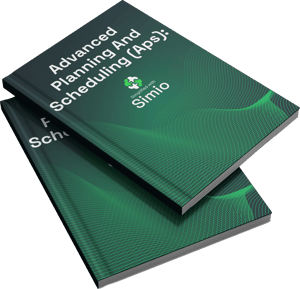
Why This Book Matters

Traditional manufacturing scheduling methods often fail to account for real-world variability and resource constraints. Organizations face cascading delays when a single machine breakdown or material shortage disrupts carefully constructed plans. These rigid approaches create operational blind spots, forcing reactive decision-making that increases costs and erodes customer satisfaction.

The consequences extend beyond missed delivery dates. Inefficient resource management leads to underutilized equipment, excessive overtime costs, and inventory imbalances. Production planners spend valuable time manually adjusting schedules rather than focusing on strategic improvements. Supply chain optimization becomes nearly impossible when scheduling systems cannot adapt to changing demand patterns or supplier disruptions.

APS Simplified with Simio addresses these challenges by explaining how simulation-based scheduling transforms operational planning. Organizations implementing Advanced Planning and Scheduling report significant improvements in on-time delivery and resource utilization. The book breaks down complex scheduling algorithms into practical insights, showing how businesses can leverage finite scheduling, heuristic methods, and optimization-based approaches to achieve measurable results.

Readers discover how to:

  • Eliminate rigid scheduling constraints that prevent operational agility
  • Reduce unplanned downtime through predictive resource management
  • Optimize production workflows using digital twin technology
  • Implement data-driven production planning that adapts to real-time conditions
  • Achieve manufacturing efficiency through continuous process improvement

This book demystifies Advanced Planning and Scheduling through practical examples and step-by-step implementation guidance. Whether addressing capacity constraints, managing complex product mixes, or coordinating multi-site operations, the principles and techniques explained provide actionable frameworks for operational transformation.